
In a report published on November 16, 2026, Artemis examined Circle’s payment network as a potential rail for stablecoin transfers. The question for a sender and receiver is whether the network can move funds across borders at a low enough cost to compete with existing payment services—not whether it has already reached that scale.
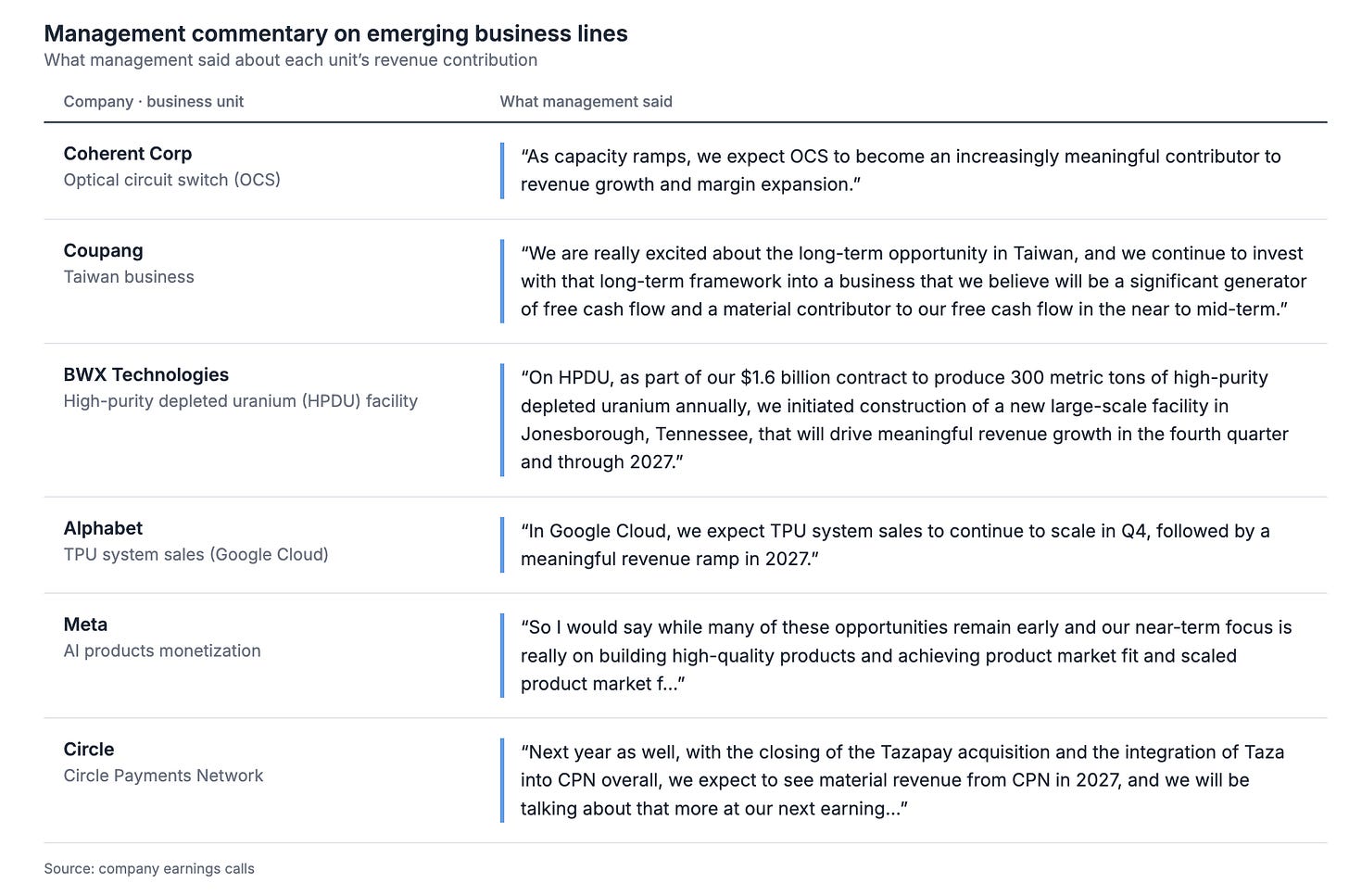
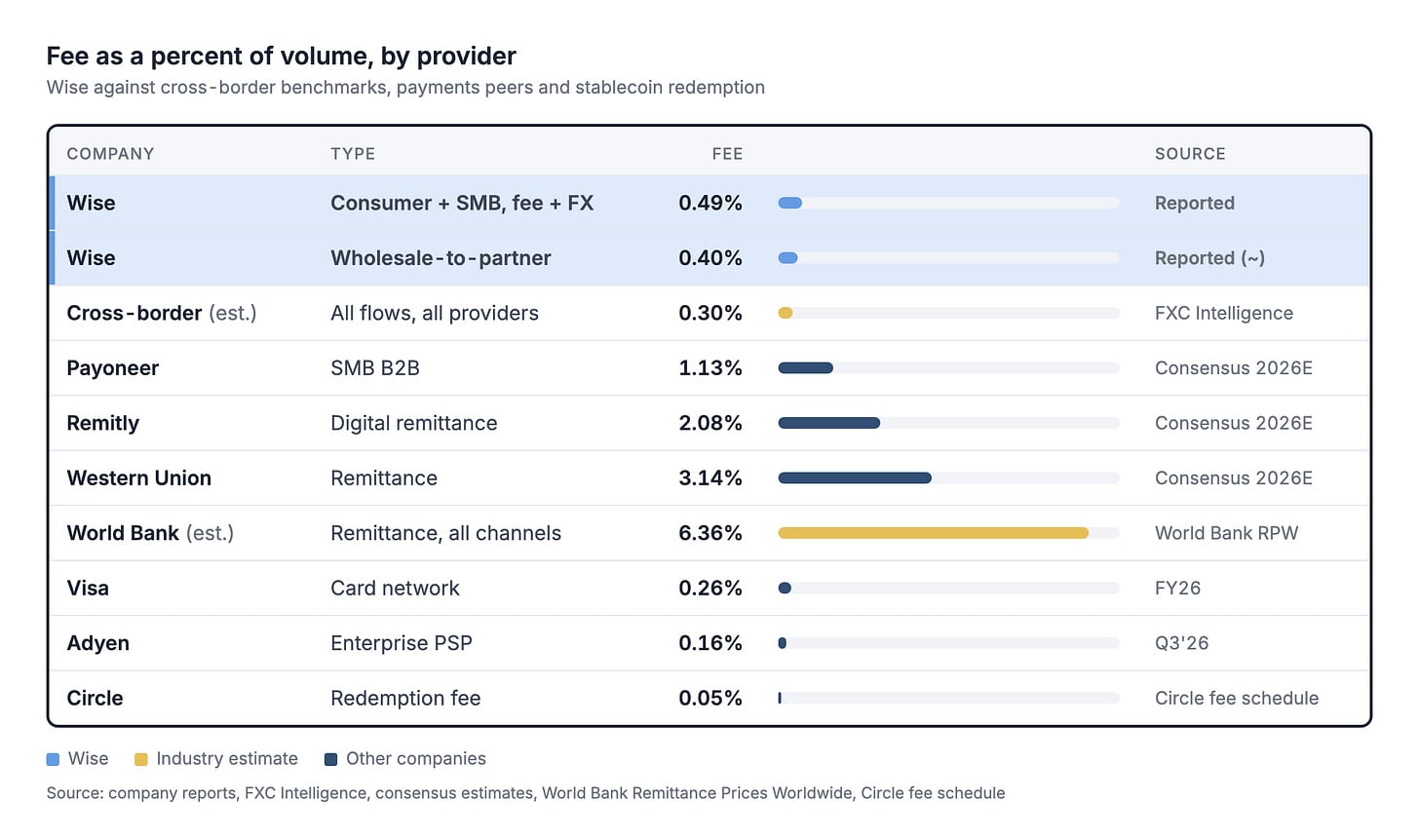
Circle CEO Jeremy Allaire said in a recent earnings call that on-chain infrastructure and digital dollars could reduce the marginal cost of storing and transferring value. He argued that the network should not be judged against a traditional payment model charging 10–30 basis points. Artemis estimated that Circle would need to charge less than 10 basis points per transaction to fully deliver on its low-cost proposition. That is Artemis’s assessment, not an announced network fee.
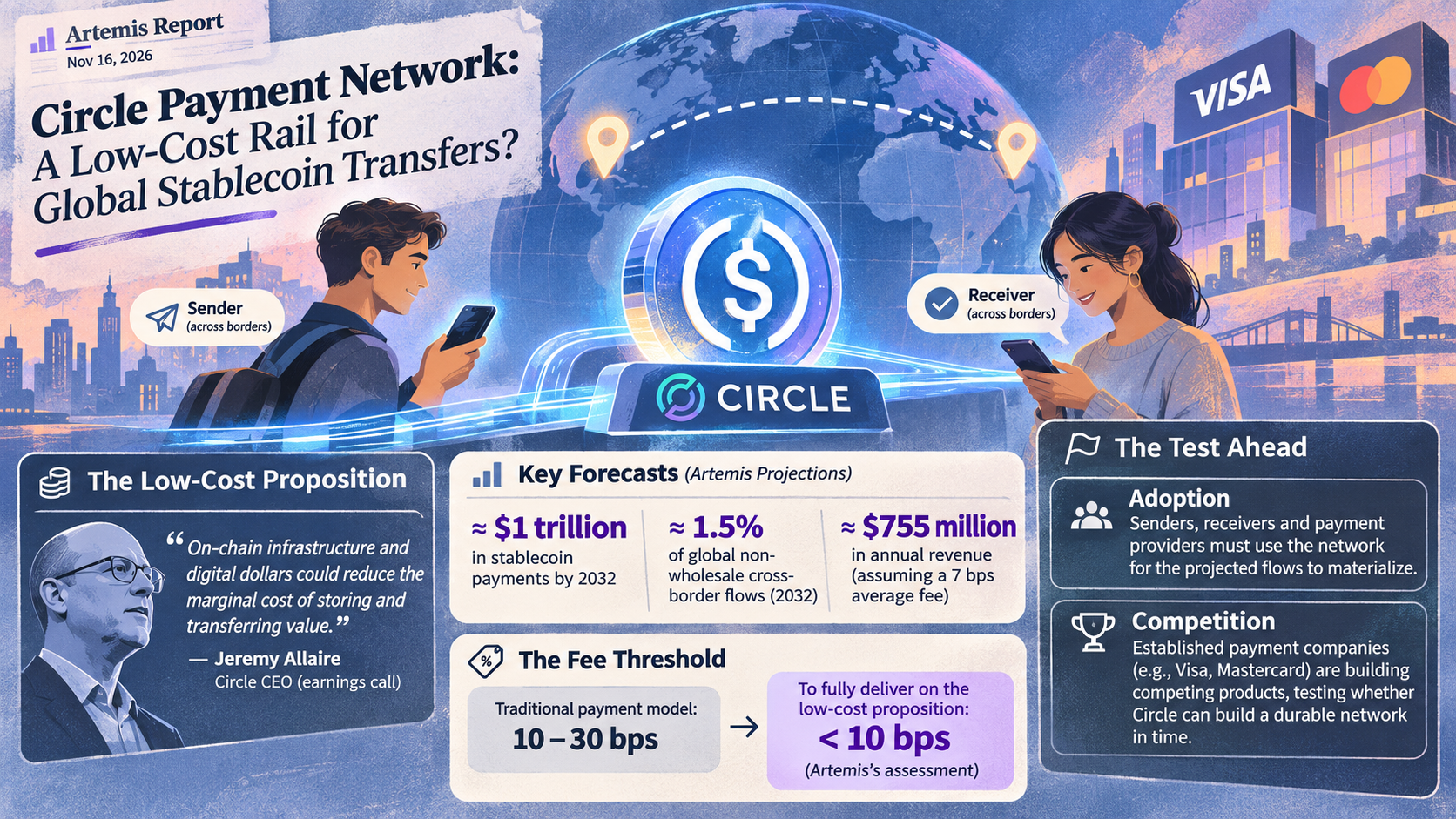
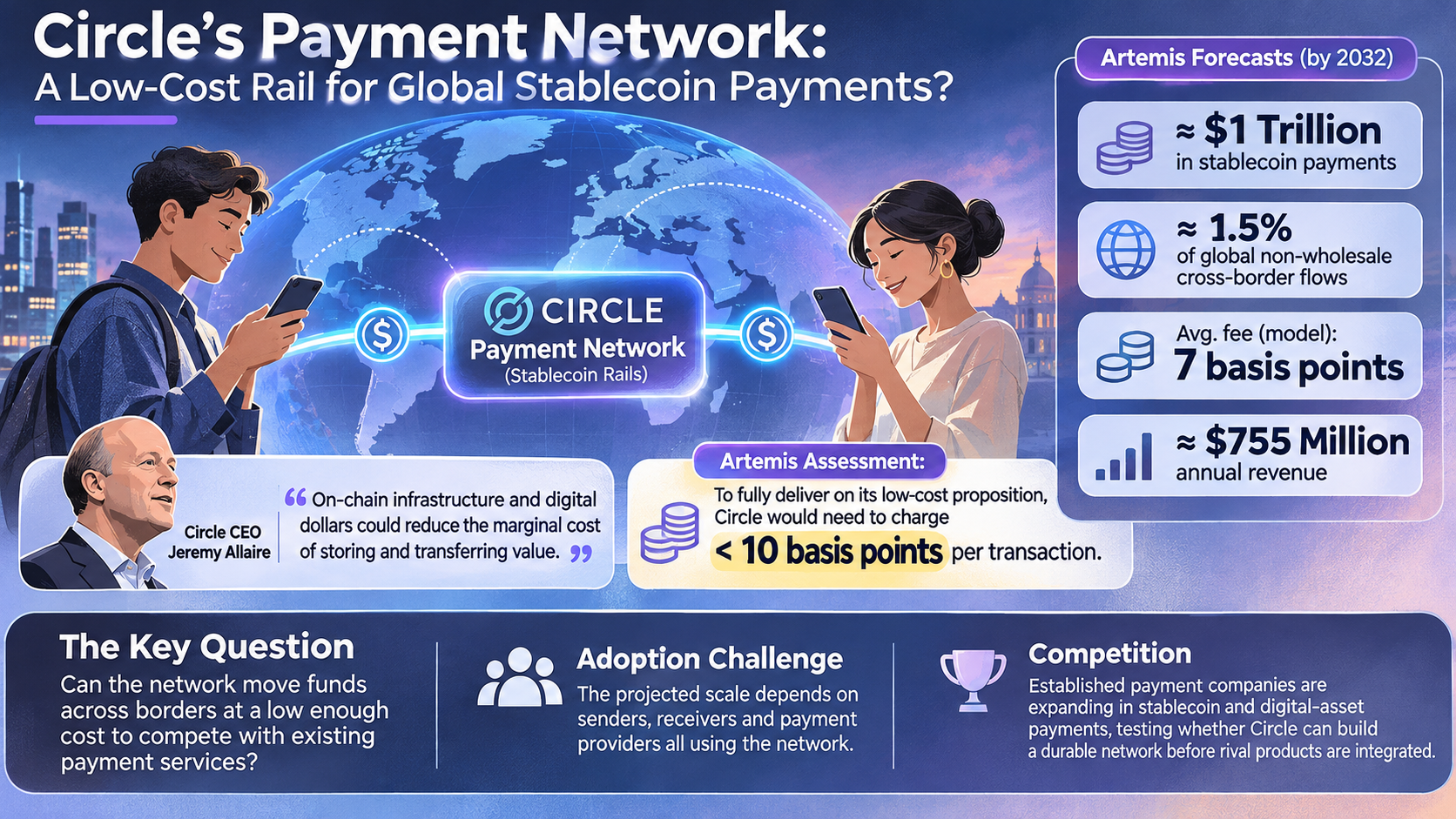
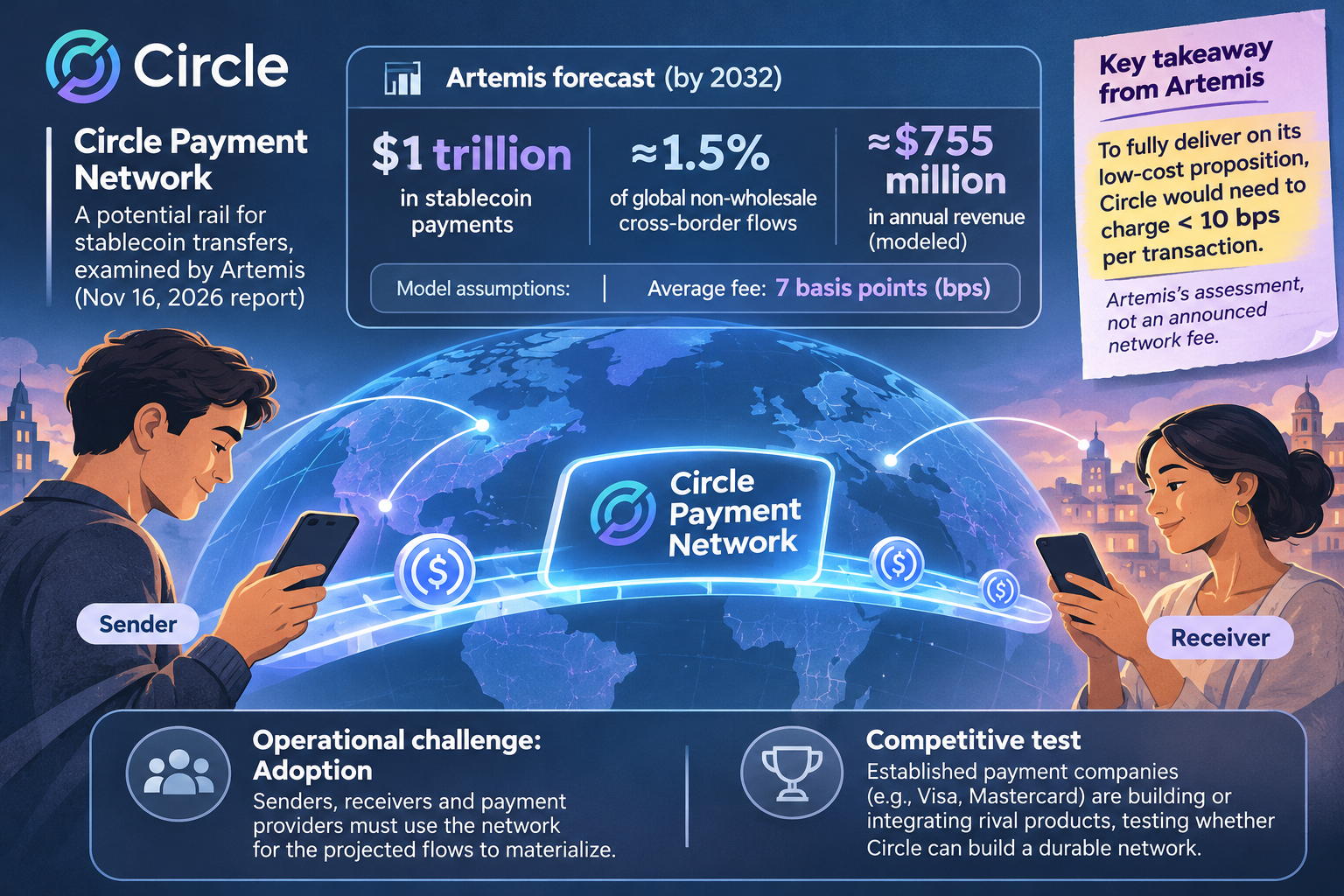
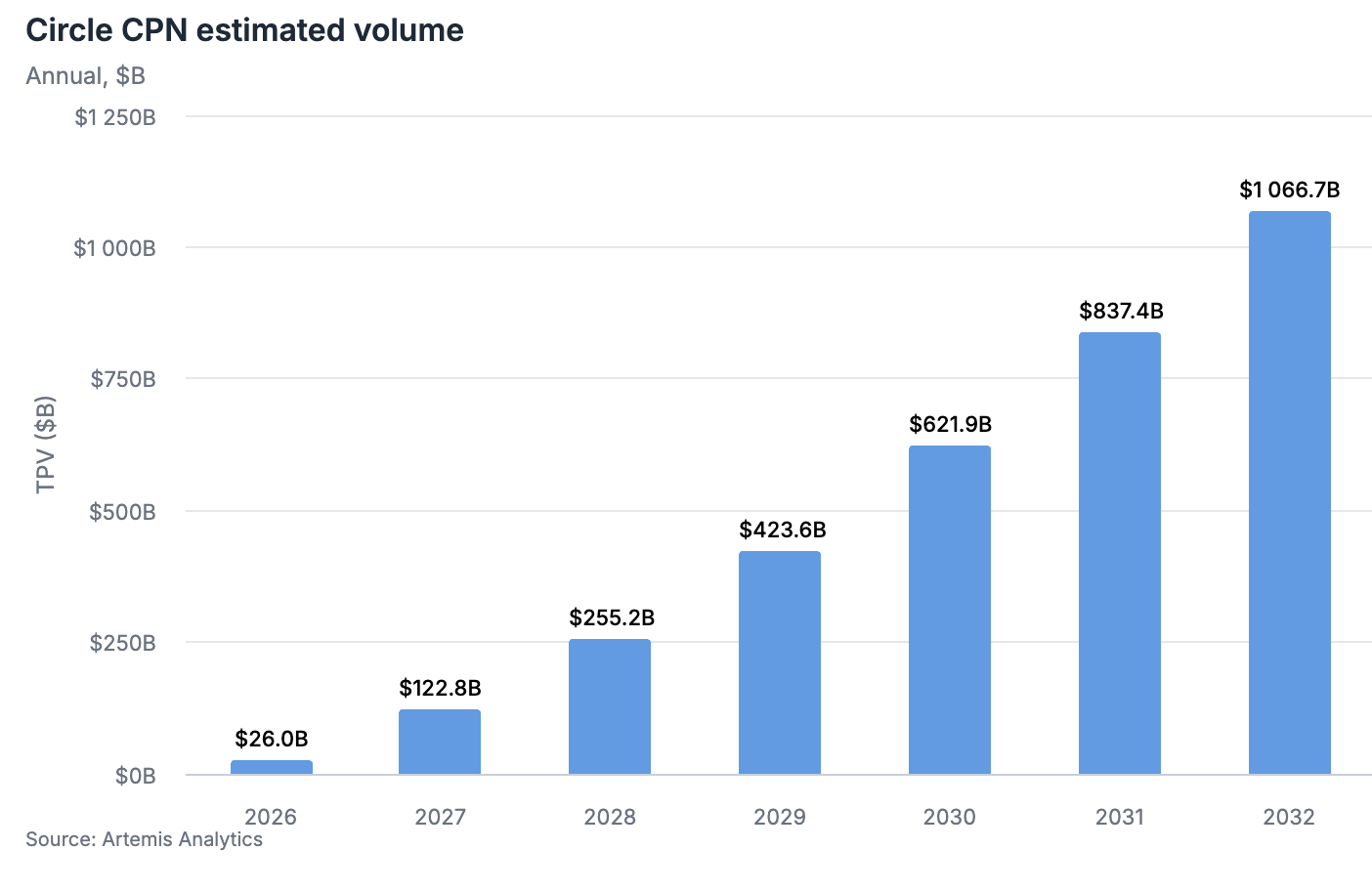
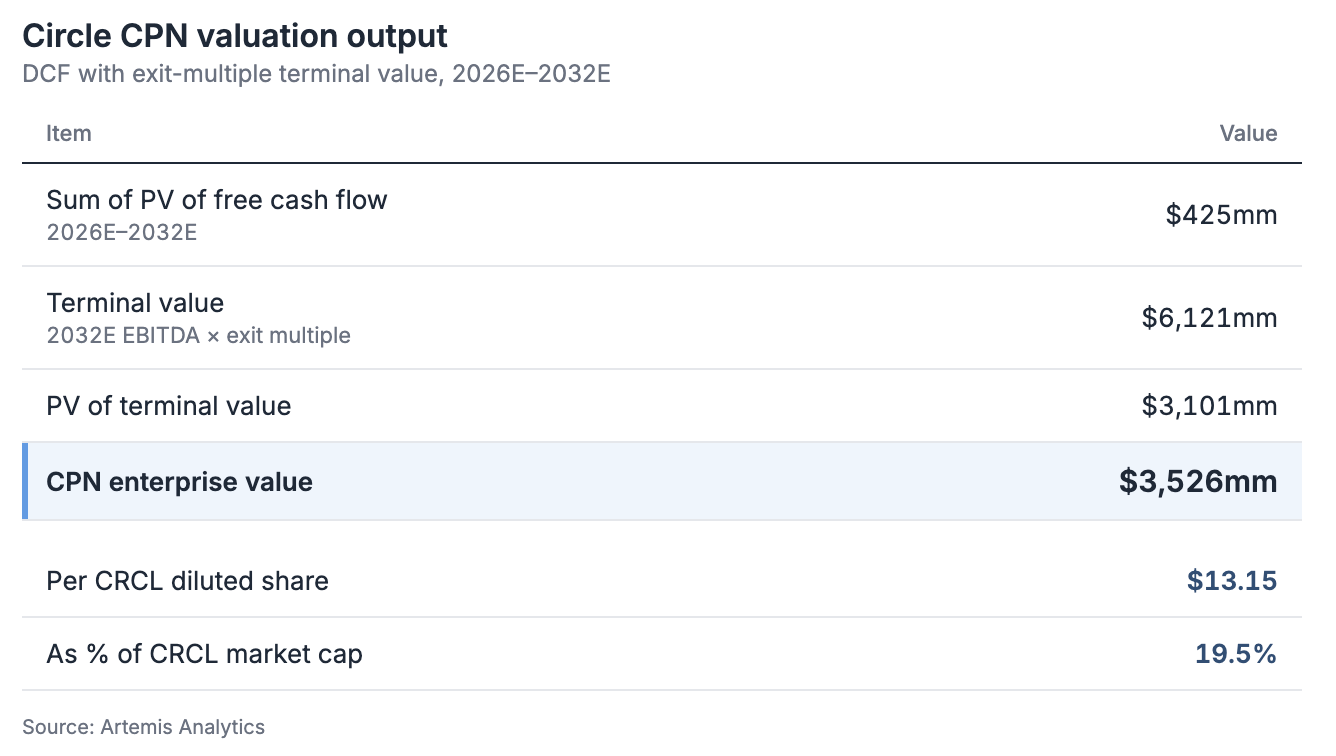
Artemis projected that the network could process roughly $1 trillion in stablecoin payments by 2032, or about 1.5% of global non-wholesale cross-border flows at that time. Its model used an average fee of 7 basis points and projected approximately $755 million in annual revenue. These are forecasts, not reported transaction volume or revenue.
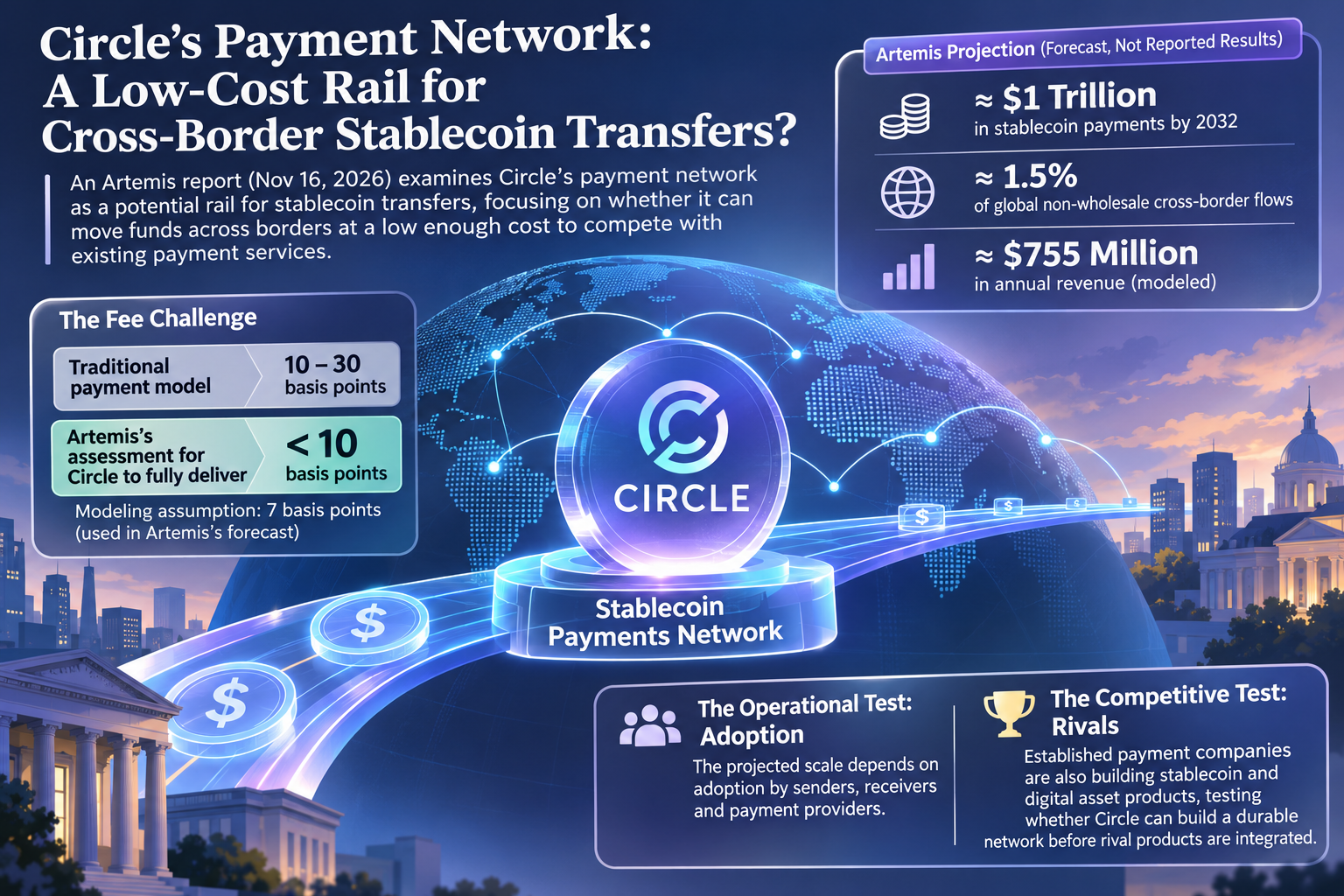
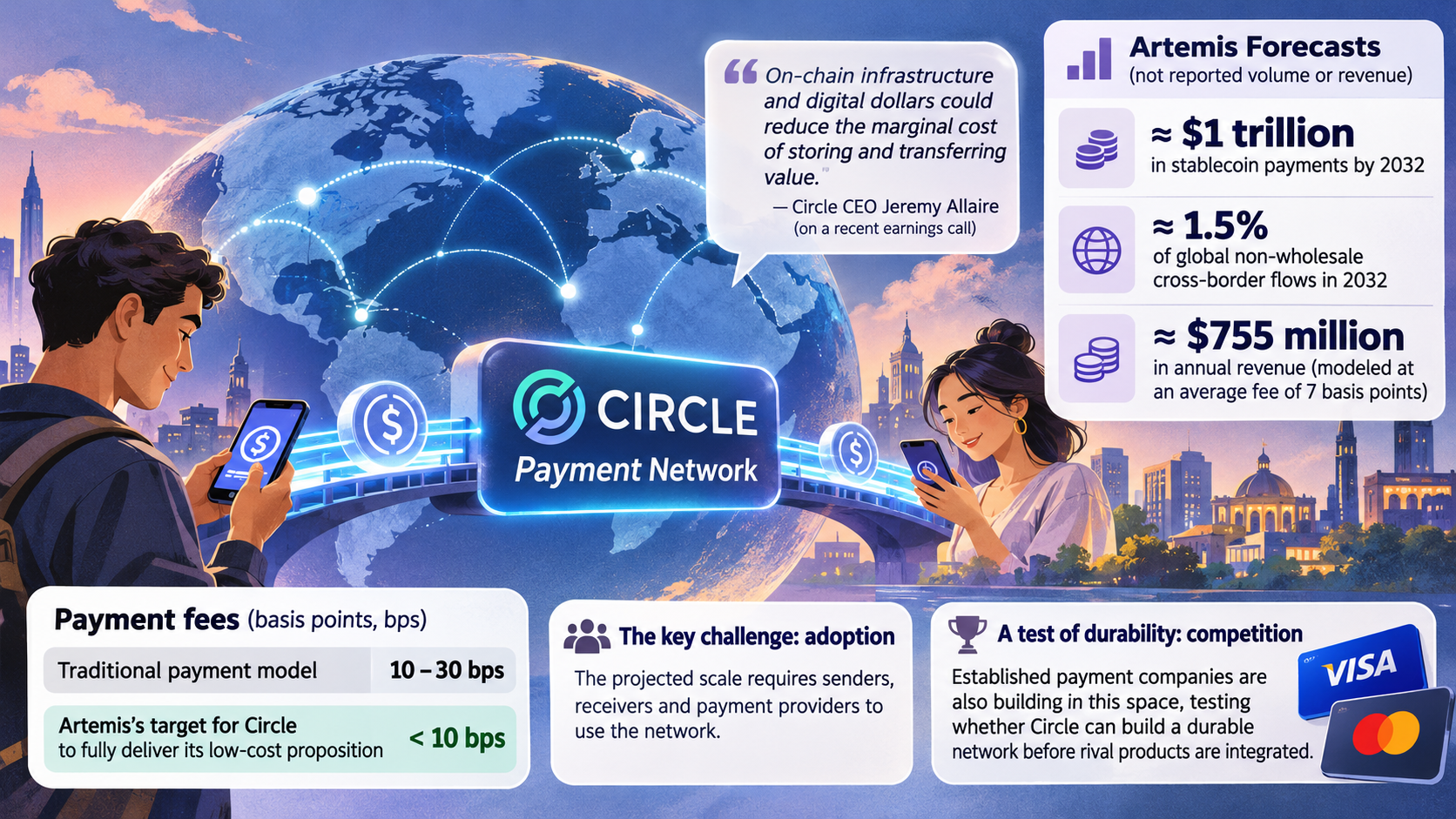
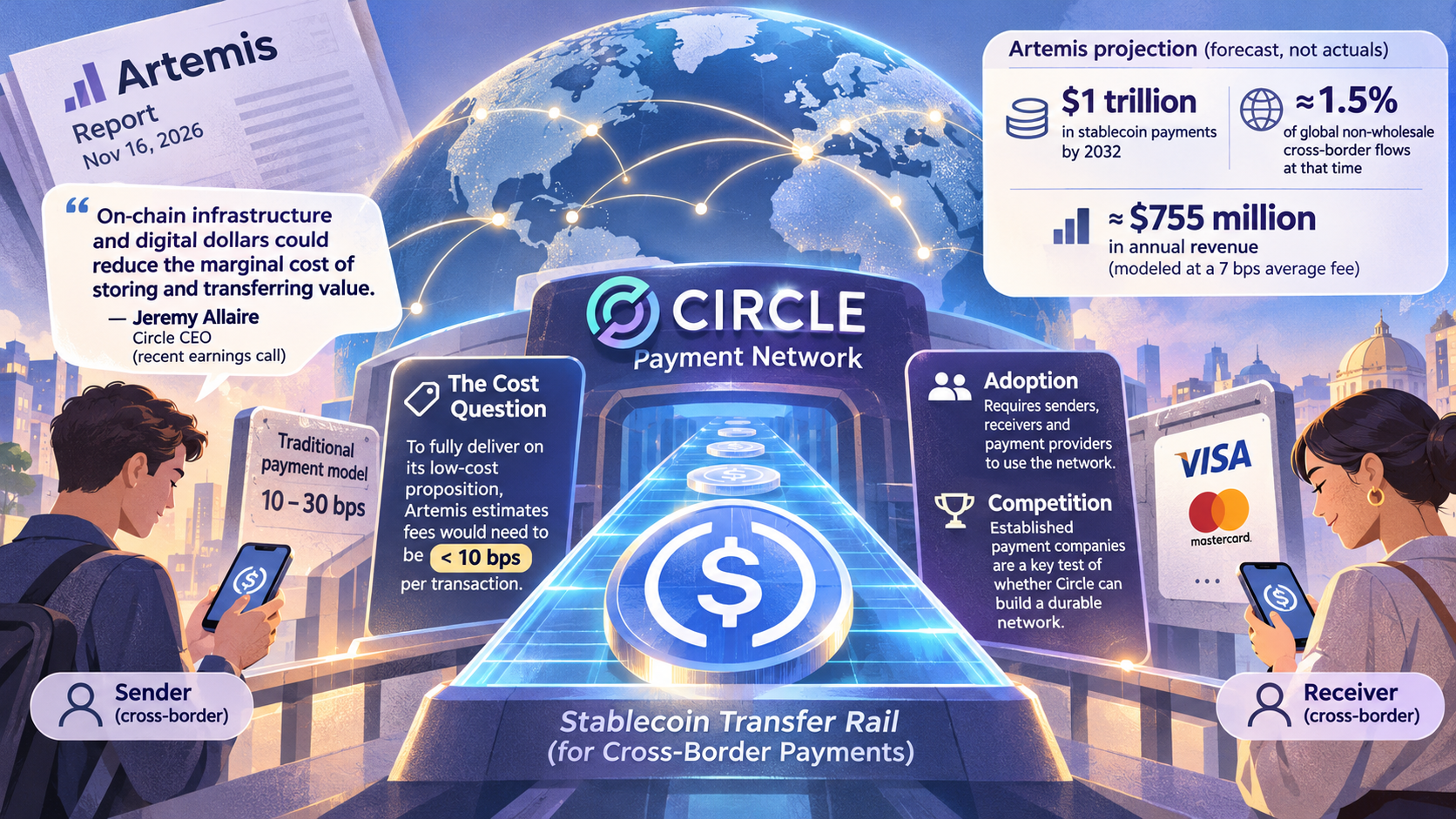
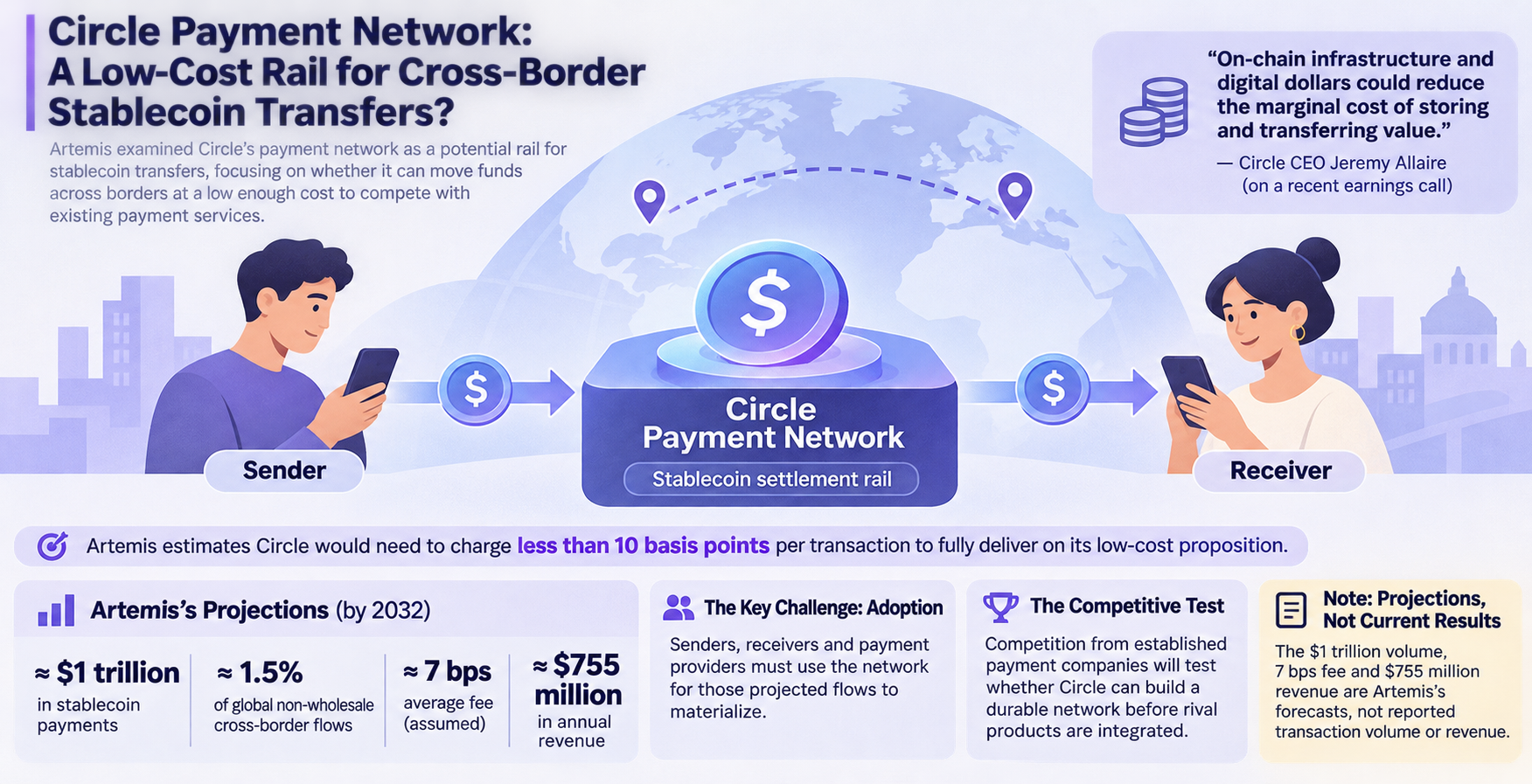
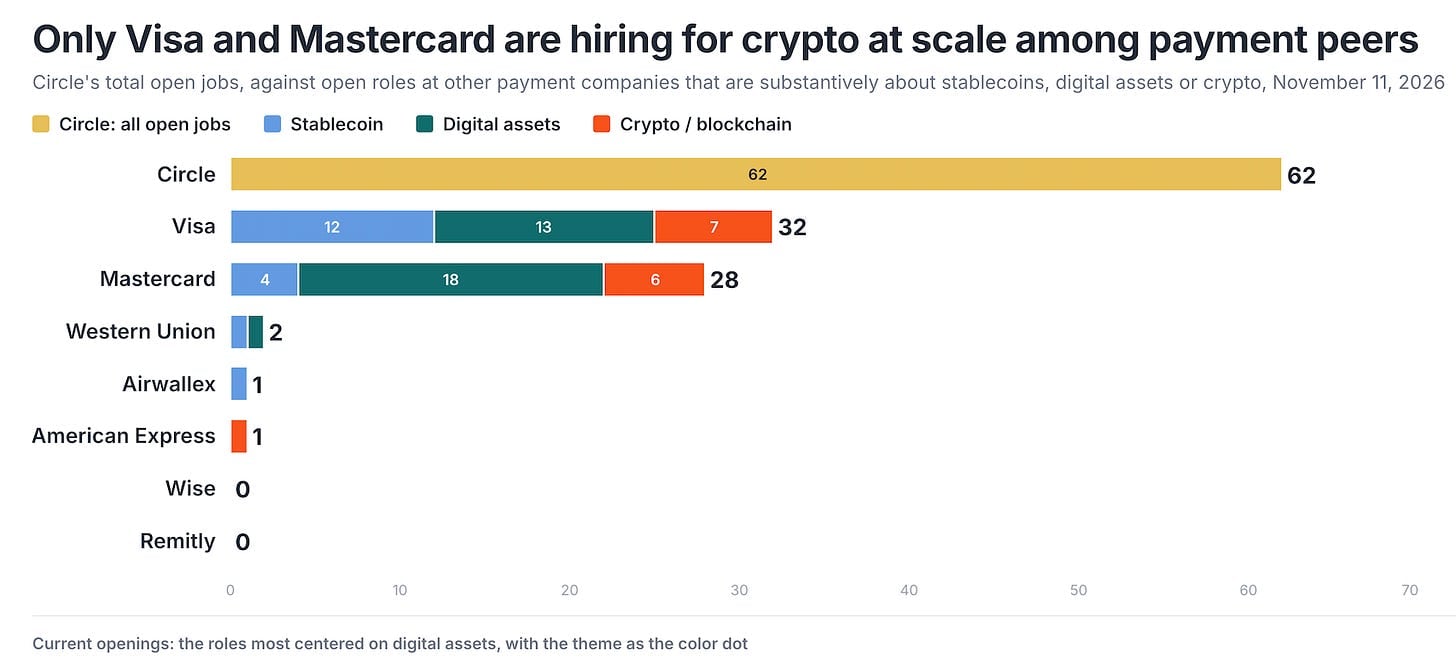
The operational challenge is adoption: senders, receivers and payment providers must use the network for those projected flows to materialize. Artemis also identified competition from established payment companies as a test of whether Circle can build a durable network before rival products are integrated.