
A customer pays in stablecoins, and a merchant receives Hong Kong dollars in a bank account. That may look like one payment product, but the licensing questions depend on who handles each step. In a legal analysis published on 16 November 2026, Shao Jiadian of Mankun Blockchain Legal Services argued that companies should map their payment flows, customer balances and control of assets before drawing up a licence list.
From stablecoin payment to bank settlement
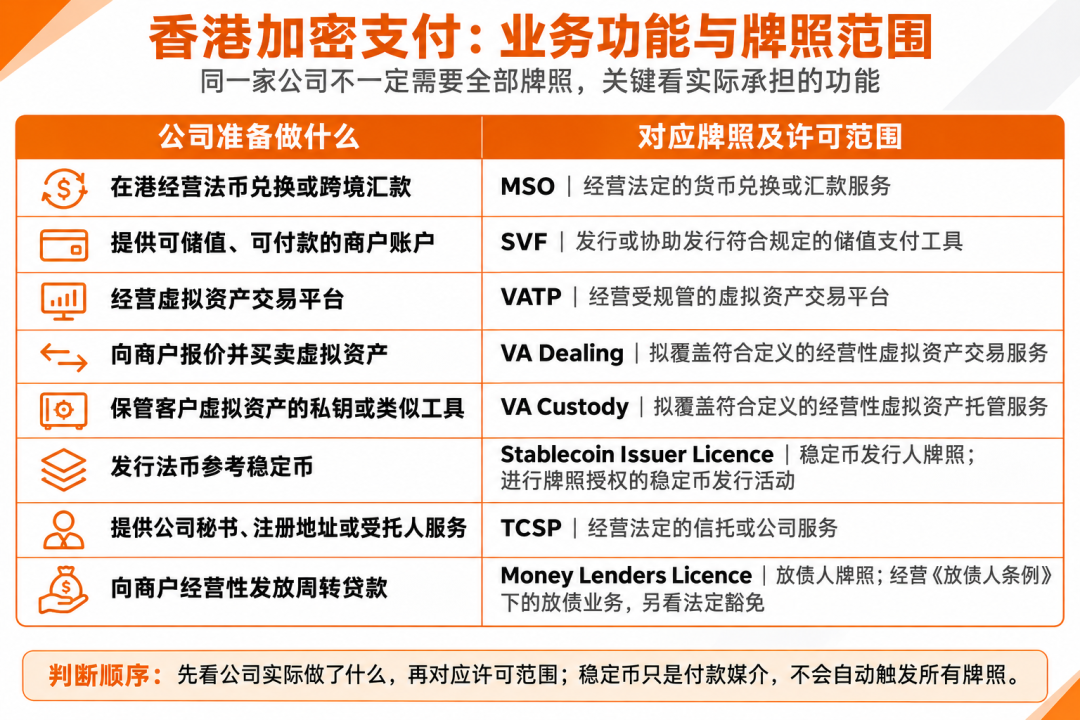
If a buyer abroad pays in stablecoins and the merchant ultimately receives Hong Kong dollars, the company must distinguish the stablecoin conversion from the fiat-money transfer. Hong Kong’s Money Service Operator (MSO) framework covers fiat currency exchange and remittance services; an MSO licence does not, by itself, authorise stablecoin trading. Whether the Hong Kong-dollar leg falls within MSO depends on what the company actually does for the customer, including whether it receives money, arranges a cross-border payment or undertakes to deliver Hong Kong dollars. A bank making the final transfer does not automatically remove the payment company from that assessment.
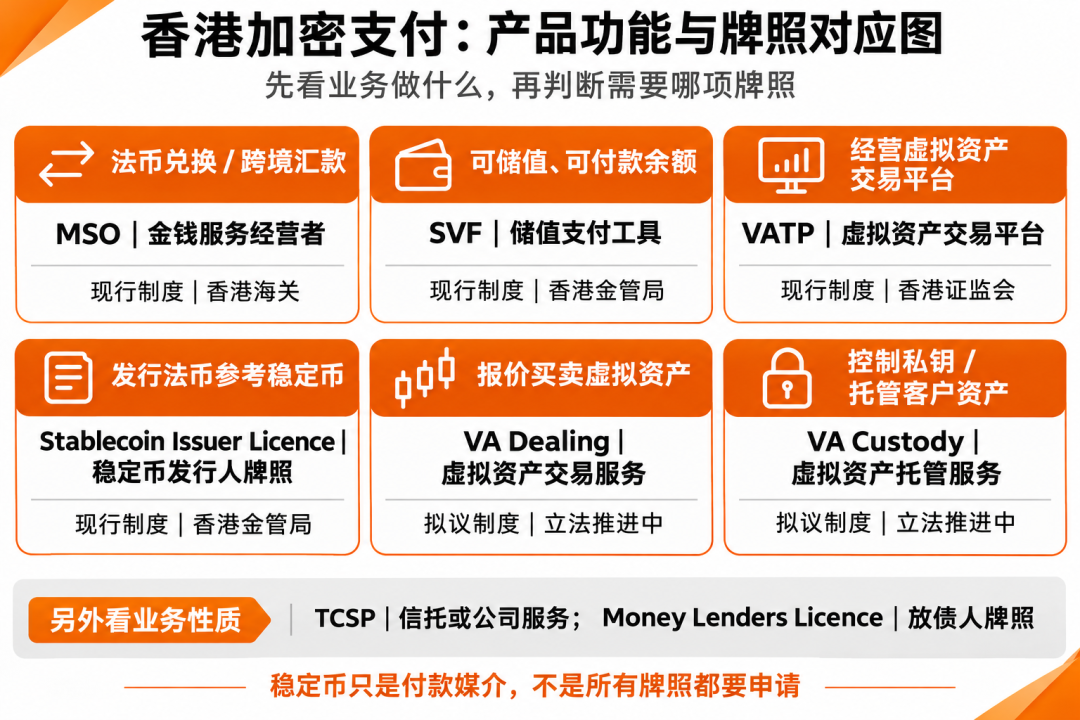
A company may handle the fiat settlement itself or work with a licensed MSO. In the latter case, the analysis says the contracts and the partner’s permitted scope must match the responsibilities each party takes on.
Does the merchant keep a spendable balance?
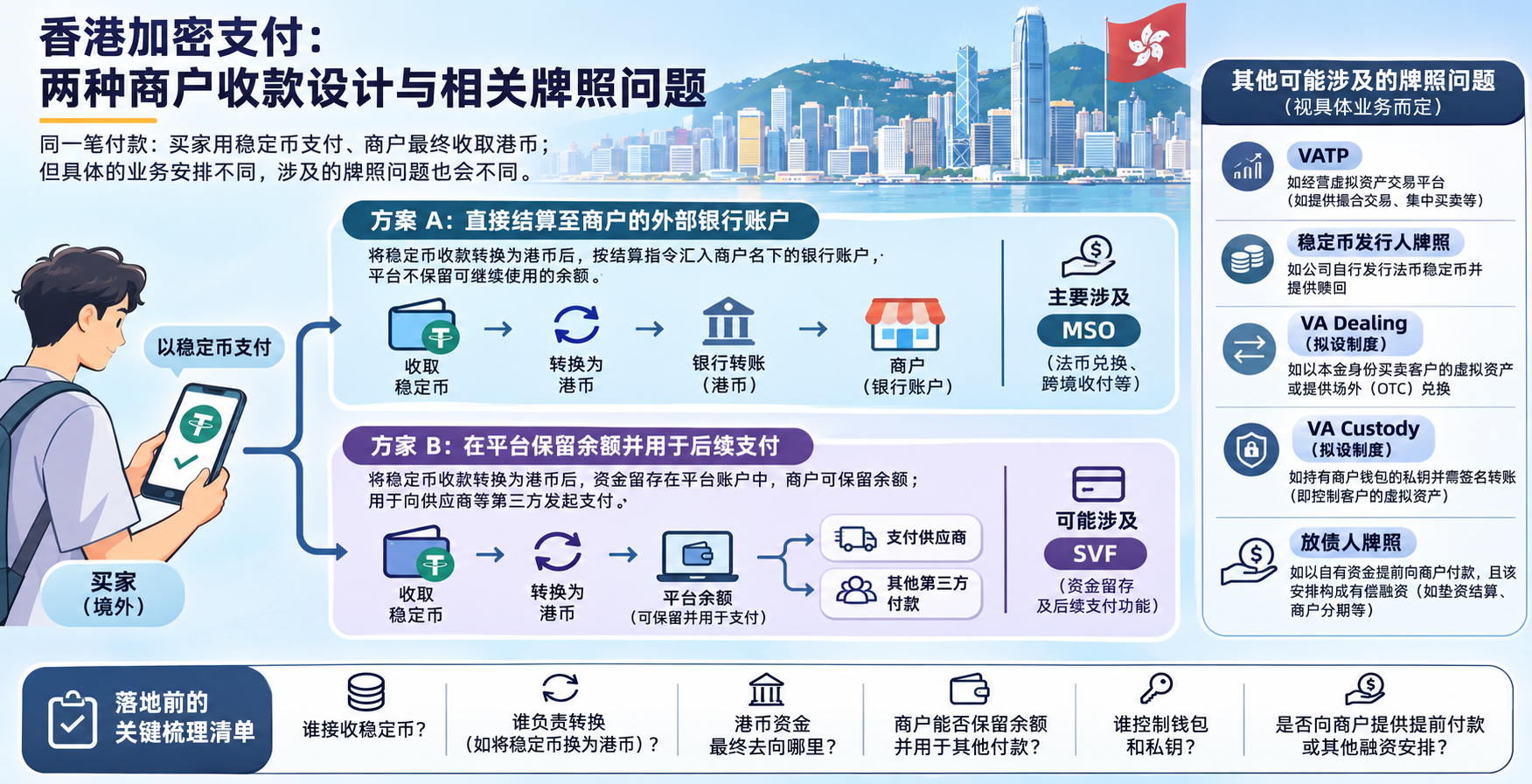
Settling proceeds to the merchant’s external bank account is different from leaving them on the platform for later payments. If a merchant can retain a balance and use it to pay suppliers or other third parties, the product may raise Stored Value Facility (SVF) questions. The analysis cites a minimum paid-up capital requirement of HK$25 million for an SVF applicant, alongside capital-strength, risk-management and fund-safeguarding requirements.
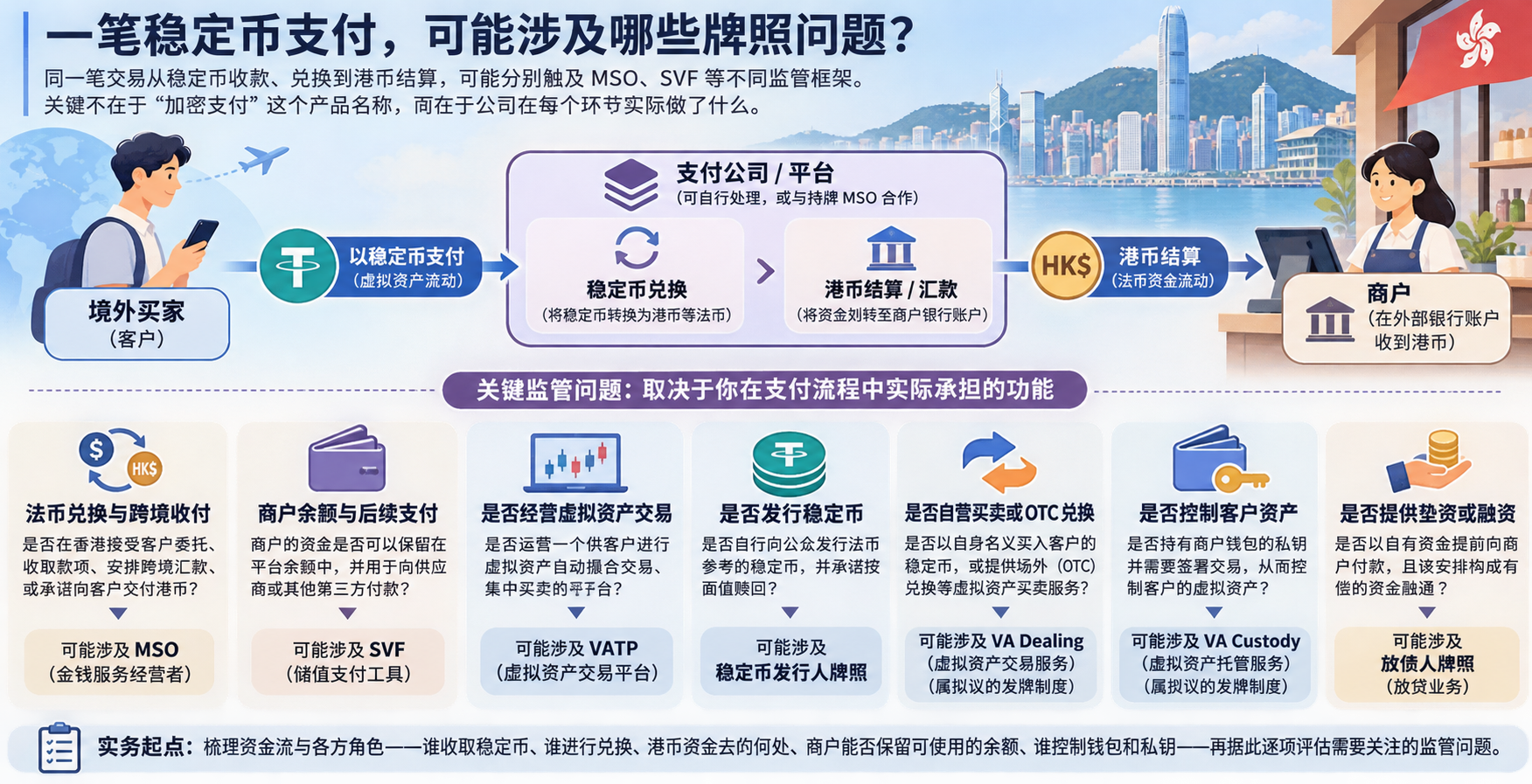
By contrast, a design that passes settlement instructions through and sends funds to the merchant’s external bank account, without creating a reusable platform balance, presents a different set of functions to assess. The label “balance” alone does not settle the licensing question; what the merchant can do with the funds matters.
Conversion, wallets and additional services
Using a stablecoin for payment does not mean operating a Virtual Asset Trading Platform (VATP) or issuing a stablecoin. VATP analysis concerns the operation of a virtual-asset trading platform, rather than the mere presence of a stablecoin in a payment flow. The Hong Kong legislature passed the Stablecoins Ordinance in May 2025; the issuer-licensing question concerns a company that itself issues fiat-referenced stablecoins and undertakes redemption, not one that simply uses an existing stablecoin for settlement.
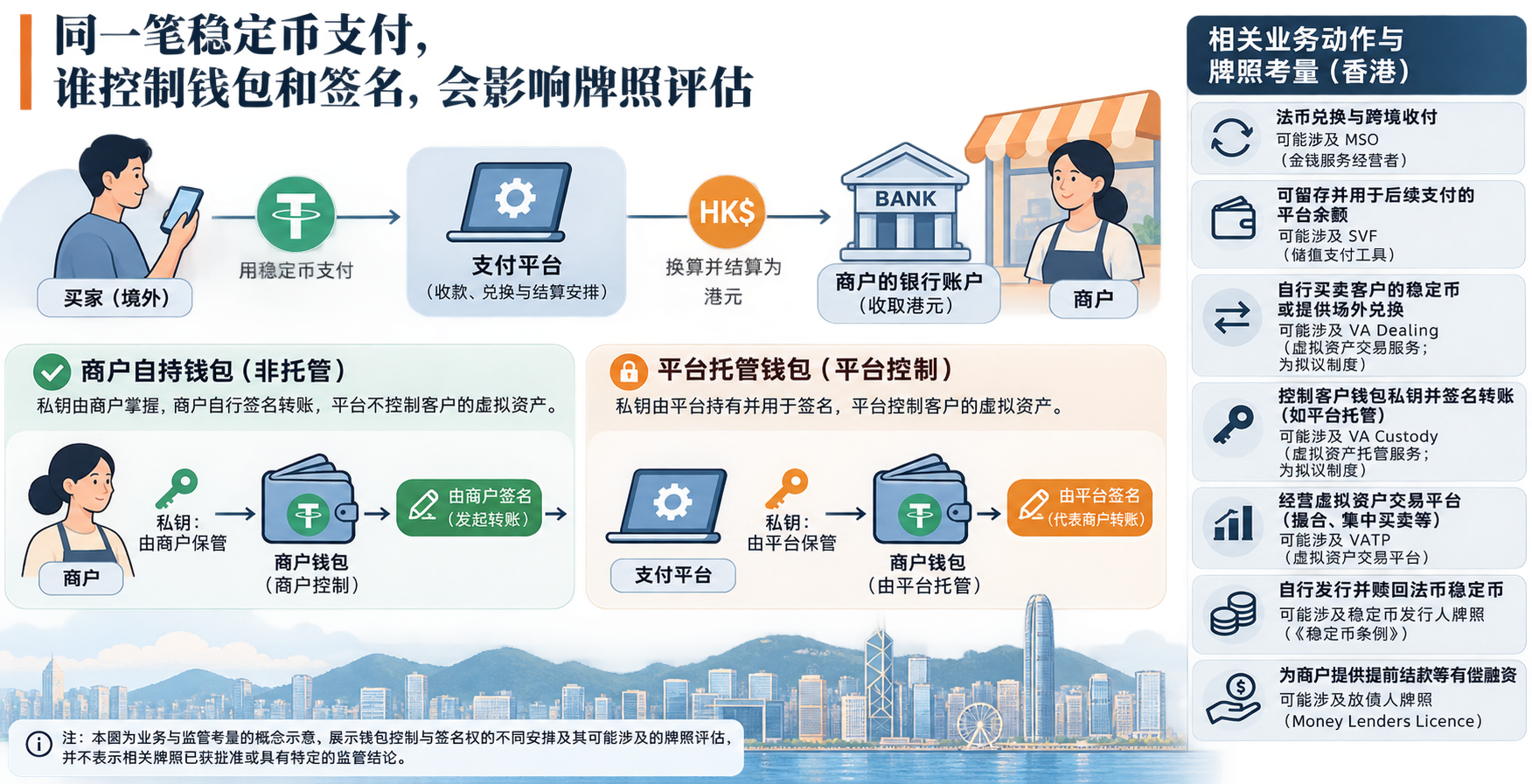
The analysis flags two further boundaries. If the payment company buys customers’ stablecoins as principal or offers over-the-counter conversion, that is distinct from its fiat remittance role. If it holds a merchant wallet’s private keys and must sign transfers, it controls the customer’s virtual assets; that differs from a non-custodial arrangement. As described in the November 2026 analysis, separate VA Dealing and VA Custody licensing regimes were proposed, not licences already in force under those proposed regimes.
Finally, paying a merchant early from the company’s own funds could raise money-lending questions if the arrangement amounts to paid financing. The practical starting point is therefore to trace who receives the stablecoin, who converts it, where the fiat proceeds go, whether the merchant can spend a retained balance, and who controls the wallet. Those actions—not the product name “crypto payments”—determine which regulatory questions need to be examined.