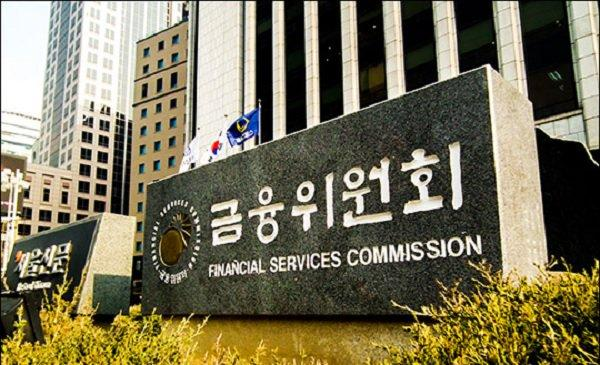
South Korea’s Financial Services Commission (FSC) presented a draft digital asset law on November 24, 2026, that would initially limit issuance of won stablecoins to consortia in which banks collectively hold a majority. Holders would have the right to redeem their tokens for cash at face value at any time. The proposal would also require crypto exchanges to obtain licenses and compensate users for certain losses from hacks or system failures without requiring users to prove the platform was at fault.
None of those rules is in force. The government presented the draft to the Virtual Asset Committee as the second phase of legislation discussed since January 2025. Known as the Digital Asset Basic Act, it would bring issuance, custody, exchange governance and user protection under one law. The National Assembly can amend it, and implementing decrees would determine many of the details.
From issuance to redemption
The draft defines a stablecoin as a “digital payment token” intended primarily for payments and pegged to a single fiat currency. An issuer would need an FSC license, at least 5 billion won in equity capital, a viable business plan, adequate staff and systems, qualified executives and major shareholders, and controls for conflicts of interest. A license alone would not authorize issuance: the FSC would also have to approve a plan specifying the amount to be issued, how reserves would be managed and how holders could redeem.
For a won stablecoin, banks would initially have to own at least 50% plus one share of the issuing consortium. A technology or fintech company could still be its largest individual shareholder. One reported illustration has four banks owning 15% each, a technology company holding 30% and other participants holding 10%. How the Banking Act’s 15% limit on an individual bank’s investment would apply remains under discussion. The Bank of Korea has advocated a bank-first approach, citing risks to monetary policy, capital flows and financial stability. The draft gives no date for relaxing the majority requirement.
An issuer would have to back at least 100% of the tokens in circulation with reserves denominated in the pegged currency. It could use only highly liquid assets such as deposits and government bonds, keep the reserves with an institution such as a bank or in trust, and have them audited monthly. It could not pay holders interest or an equivalent return.
For a recipient holding the token, the key protection would be redemption at par without delay. Creditors could not seize the reserves or use them to offset other claims. If the issuer lost its license, went bankrupt or could no longer operate after a hack, the reserve custodian would give holders priority in payment.
The FSC could designate a stablecoin with at least 1 trillion won in circulation as significant, triggering additional capital and reserve-liquidity requirements. The Bank of Korea could participate in joint inspections. For an adequately supervised foreign issuer to issue and redeem won stablecoins in South Korea, it would have to establish a local branch, maintain operating funds in the country, register with the FSC and complete foreign-exchange reporting.
Exchanges and licensed institutions could not list, trade, broker or hold a stablecoin whose issuance plan lacked the required approval or filing. As of November 27, 2026, no won stablecoin was circulating in South Korea. Passage of the bill would not itself set a launch date: an issuer would still need its license and plan approval.
Exchange licenses, custody and ownership
The draft would replace a single service-provider filing with separate FSC licenses for trading, brokerage and custody. An exchange would need all three. Asset managers could register rather than seek a license if they neither held customer assets directly nor had the ability to transfer them. Custodians would have to segregate customer assets, protect them from seizure and offset, and undergo regular external audits.
Blockmedia and other outlets reported proposed minimum equity capital of 2 billion won for trading, brokerage and custody businesses, 1 billion won for stablecoin-only businesses and 500 million won for asset managers. A presidential decree would set the final amounts.
A single major shareholder would generally be limited to 20% of an exchange. Financial companies and certain other shareholders could hold up to 34% with FSC approval. Shares above the applicable ceiling would lose voting rights. Korean media quoted an FSC official as saying the regulator would not order a forced sale, but a shareholder would have to correct a breach before applying for another license. Domestic and foreign shareholders would face the same limits. Exchanges would have three years from designation to comply, with up to three additional years for small and midsize platforms.
The largest shareholders of all five major won exchanges reportedly held more than 20%. The proposed Naver–Dunamu transaction, under which Naver Pay would own 100% of the Upbit operator, would need a different ownership structure if the cap passed unchanged. Exchange alliance DAXA and industry participants argue that the limit could weaken competitiveness, dilute major shareholders’ responsibility for customer assets and infringe property rights. The National Assembly Research Service has also questioned its constitutionality.
Who pays after a platform failure?
Exchanges and other licensees would generally owe compensation for user losses caused by a hack or system failure even if the institution was not negligent. Korean media reported possible exceptions for a user’s intentional conduct or gross negligence, or where agreed terms provide otherwise. The scope and limits of compensation remain unsettled.
Compensation would be separate from any regulatory penalty. Licensees would have to meet IT security standards comparable to those for financial companies. If a breach of those duties caused an incident, the FSC could impose a penalty of up to 10% of turnover. The proposals follow Bithumb’s erroneous bitcoin payout on February 6, 2026. A regulatory and industry response group discussed no-fault compensation, internal controls and electronic security standards on March 4.
Token sales and exchange disclosures
The bill would lift South Korea’s 2017 ban on domestic initial coin offerings, subject to disclosure requirements. Before selling, an issuer or the dealer or broker handling the sale would have to file a white paper with the FSC identifying the responsible parties, use of funds, token supply, project specifications and risks. Investors would also receive a short prospectus. Sales could begin only after acceptance and publication of the white paper and expiry of a statutory waiting period, whose length has not been announced. The FSC could require corrections; misleading statements or material omissions could lead to civil damages, fines or criminal prosecution.
Exchanges would have to publish a report for each listing and continue disclosing material changes, including hacks, outages and changes in token issuance or circulation. Reviewing listings and monitoring unusual trading would become legal duties rather than matters of industry self-regulation. The proposed insider-trading and manipulation prohibitions would cover tokens still under listing review. Decrypt reported that the manipulation rules would also extend to crypto-to-crypto trades.
Paid token advisers would have to register, complete FSC-prescribed training and disclose financial benefits received from exchanges. The proposed category would cover paid advisory chat rooms and could extend to social-media promoters who receive a share of referred users’ trading fees. Registration would last five years.
The draft would generally limit covered industry employees to one real-name account at one exchange. Exchange staff would trade on their employer’s platform unless it did not list the asset, reversing the current rule that bars employees from trading there. Covered staff would report trades quarterly, and employers would review records for conflicts and insider trading. Implementing rules would specify which employees are covered.
What happens next
The National Assembly’s Political Affairs Committee scheduled a public hearing for December 3, 2026, at 10 a.m. Korea time. Committee chair Yoo Dong-soo was expected to introduce the government proposal for joint consideration with lawmakers’ bills. A new bill generally faces a 20-day wait after referral before it can be placed on a standing committee’s agenda. It would then need review by the Political Affairs and Legislation and Judiciary committees before a plenary vote.
The regular session was due to end December 9. The ruling Democratic Party was aiming for action in January 2027; Korean media reported a target of voting before January 18, the reported effective date of the US GENIUS Act. That was a voting target, not a Korean compliance deadline. Some reports said the Korean law would take effect one year after promulgation, with capital and ownership details still to be set by decree.