Originally reported by Decrypt on November 15, 2026, at 00:01 UTC+8.
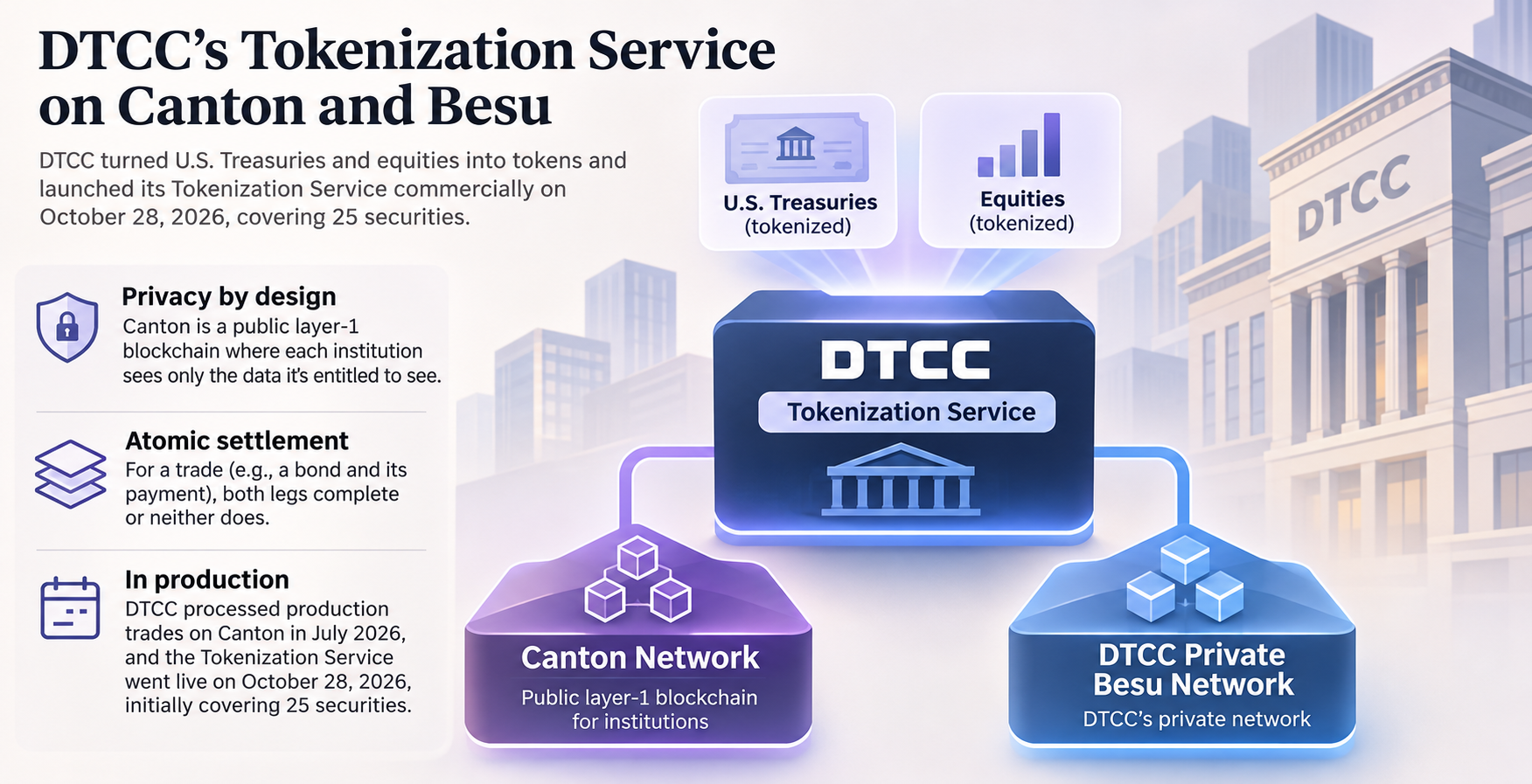
Canton Network is a public layer-1 blockchain designed for institutions that need to transfer tokenized assets without showing every transaction to the whole network. Its payment relevance is institutional settlement: coordinating the asset being delivered with the cash or token used to pay for it. The source does not describe Canton as a consumer payment network.
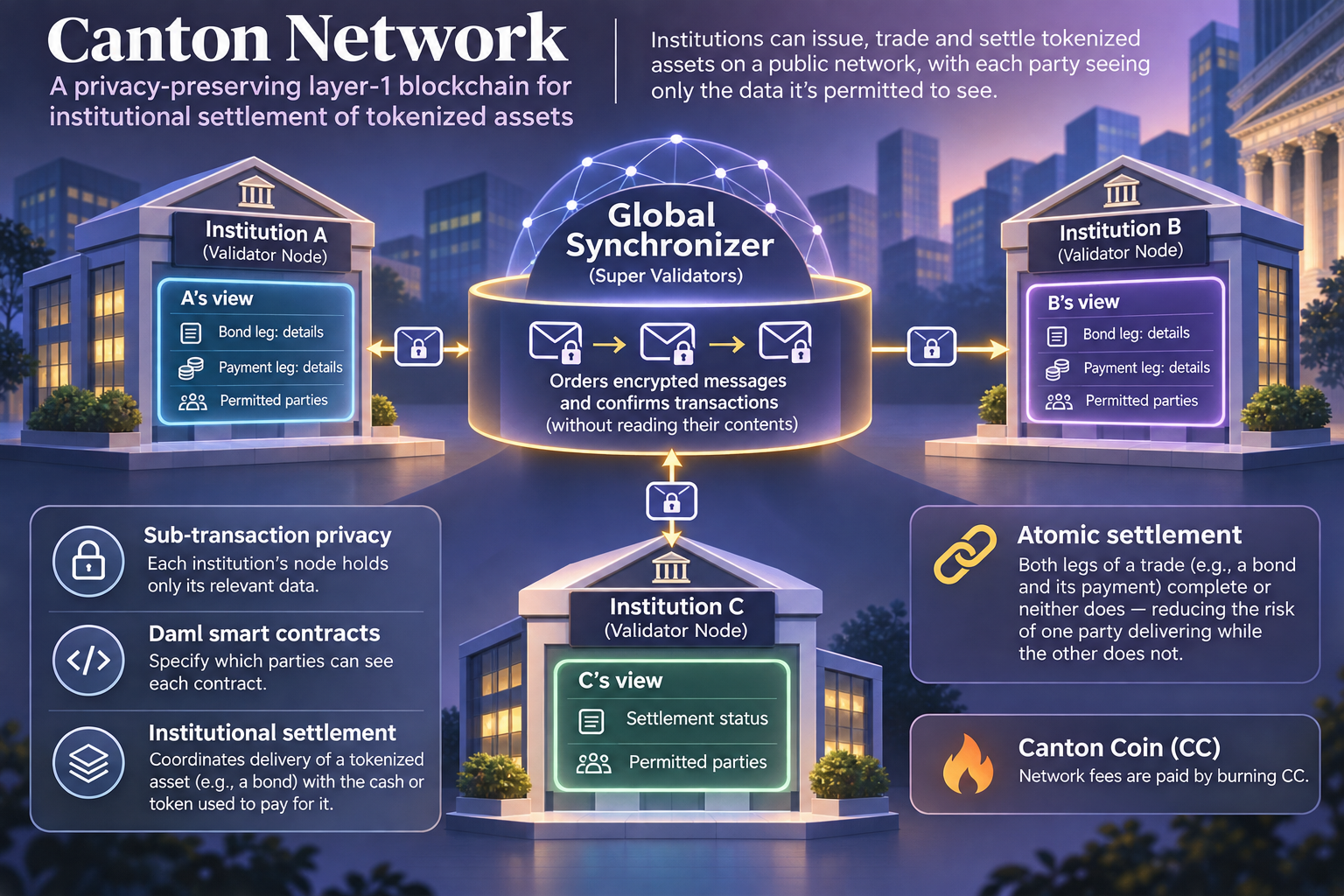
How a settlement works
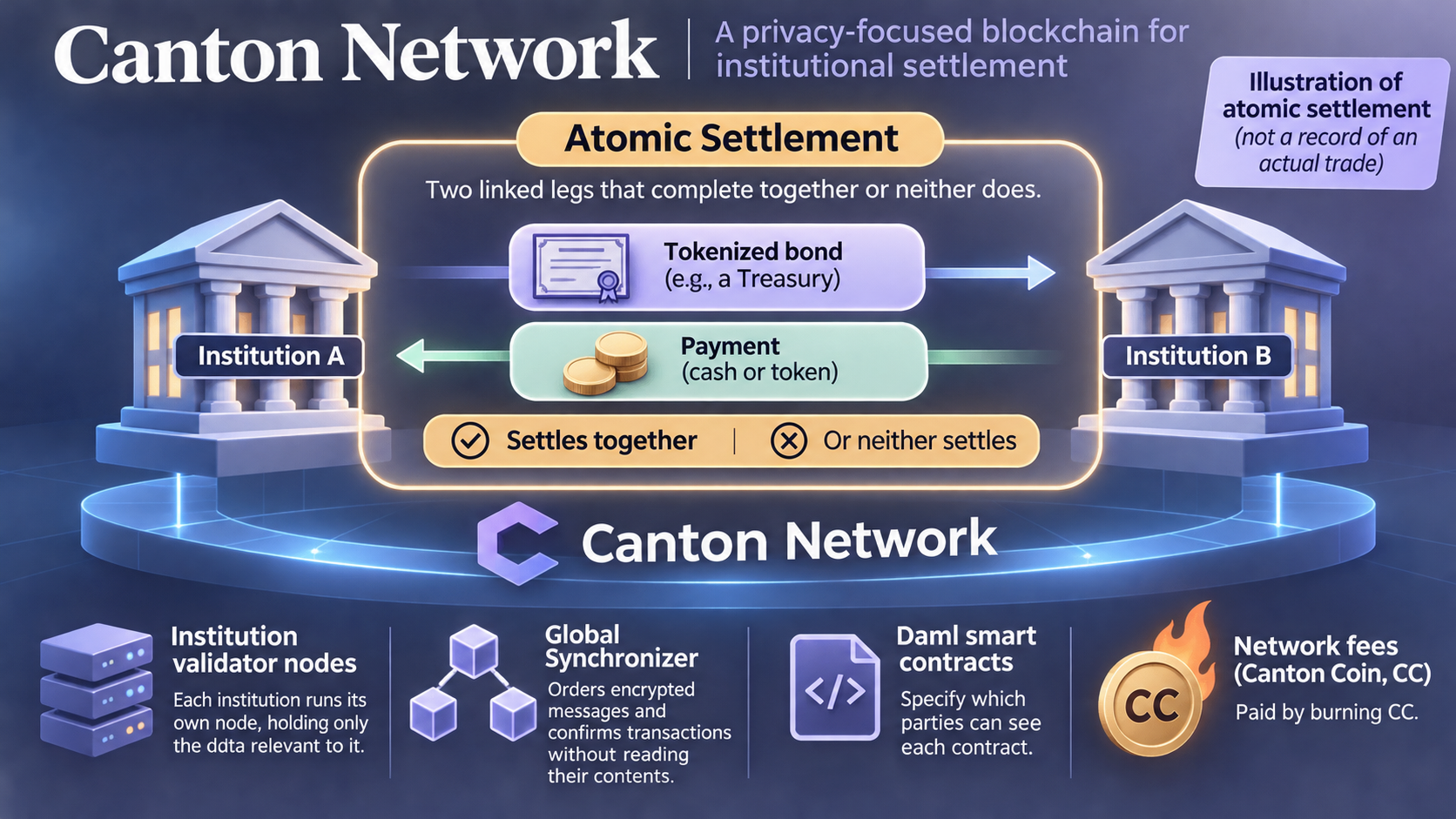
Each institution runs its own validator node, which holds only the data relevant to that institution, according to Canton’s documentation. Smart contracts written in Daml specify which parties can see each contract. The Global Synchronizer orders encrypted messages and confirms transactions without reading their contents.
For a trade involving a bond and its payment, Canton’s atomic settlement model means both legs complete or neither does. That addresses the risk of one party delivering while the other does not; it does not mean every proposed trade will settle.
What had reached production
In July 2026, DTCC processed production trades using DTC-tokenized U.S. Treasuries and equities on Canton. DTCC’s Tokenization Service launched commercially on October 28, 2026, initially covering 25 securities, according to a DTCC fact sheet. The service runs on Canton and DTCC’s private Besu network.
The source also reported that World Liberty Financial launched its USD1 stablecoin on Canton in August 2026. J.P. Morgan’s Kinexys planned a phased 2026 rollout of its JPM Coin (JPMD) deposit token on the network; that plan should not be read as a completed launch. Canton Coin (CC) is used for network fees, which are paid by burning the token.
Source: decrypt.co (originally published 2026-11-15 00:01 UTC+8)