The U.S. Securities and Exchange Commission’s Investor Advisory Committee listed tokenized securities alongside bankruptcy and accounting oversight on the agenda for a virtual December meeting. The November 25, 2026, report gave conflicting dates: its headline said December 3, while its text said December 4.
The agenda listed committee members Andrew Park and John Gulliver as moderators for the tokenization panel, with representatives from Coinbase, BlackRock, Robinhood, Nasdaq, Citadel Securities and Galaxy Digital. The committee advises the SEC on investor protection; it does not write rules.
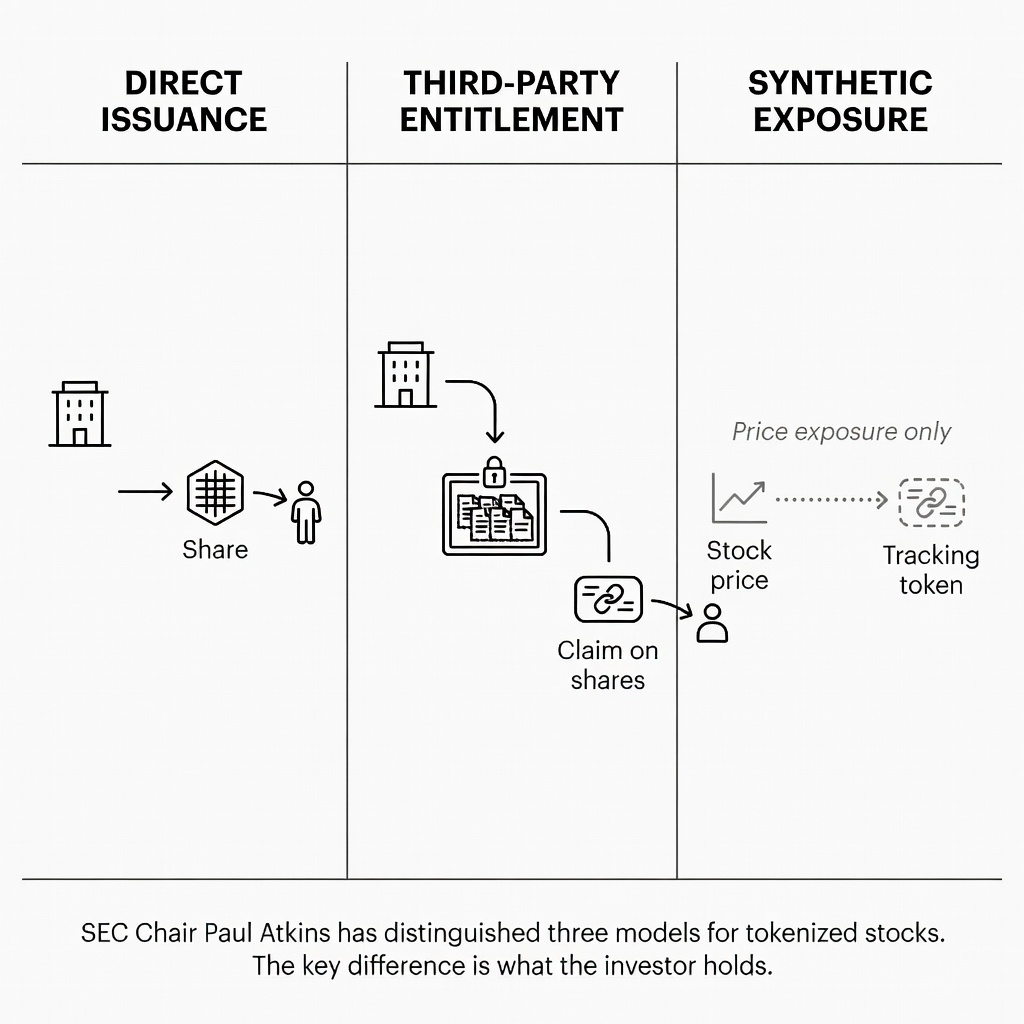
A share, a claim or price exposure
SEC Chair Paul Atkins has distinguished three models for tokenized stocks. The key difference is what the investor holds:
- Direct issuance: The company issues its shares on a blockchain. The token itself is the share.
- Third-party entitlement: A third party holds the underlying shares. The investor holds a token representing a claim on those shares.
- Synthetic exposure: The token tracks the stock’s price but gives the holder no ownership of the underlying share.
Atkins has identified faster settlement, less reliance on intermediaries and more transparent communication between companies and shareholders as potential benefits of tokenization. He has also said the SEC is working to develop an innovation exemption that would preserve existing market protections rather than offer broad regulatory relief. He described an exemption under development, not one already in effect.